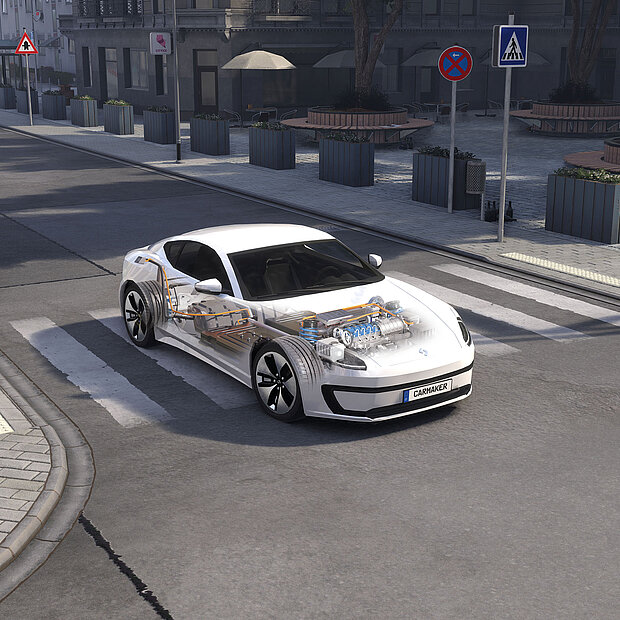
Driving the development of powertrains of all types
The powertrain is the core of every vehicle, whether it is a passenger car, truck, commercial vehicle, or special vehicle. Consequently, a great deal of effort is invested in its development, vastly increasing the range of functions and the number of possible powertrain configurations. For vehicle development to remain efficient, virtual test driving is recommended because it dramatically reduces the need for real-world test driving, saving time and money despite growing testing requirements.
Virtual
endurance tests

- Virtual test driving supports the prediction of the overall vehicle performance
- Integrate the powertrain into a virtual vehicle for extensive testing without physical resources
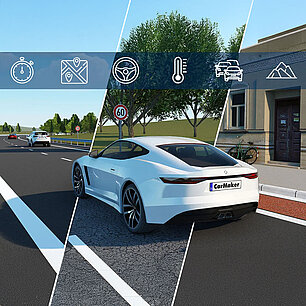
- Model different test scenarios in a simulated traffic environment with a virtual driver for realistic, flexible, and reproducible tests
- Reduce costs and save time by virtually performing complex test drives under uniform conditions
- The portion of software is increasing in modern vehicles, particularly in electric vehicles
- Calibrate and test complex software used in a wide variety of vehicle architectures early on by integrating it into CarMaker, TruckMaker, or MotorcycleMaker
- Embed control devices and virtual ECUs in a virtual full vehicle to test them in realistic, simulated environments and optimize them as needed
- Perform system integration tests at an early stage through front-loading to save effort and resources

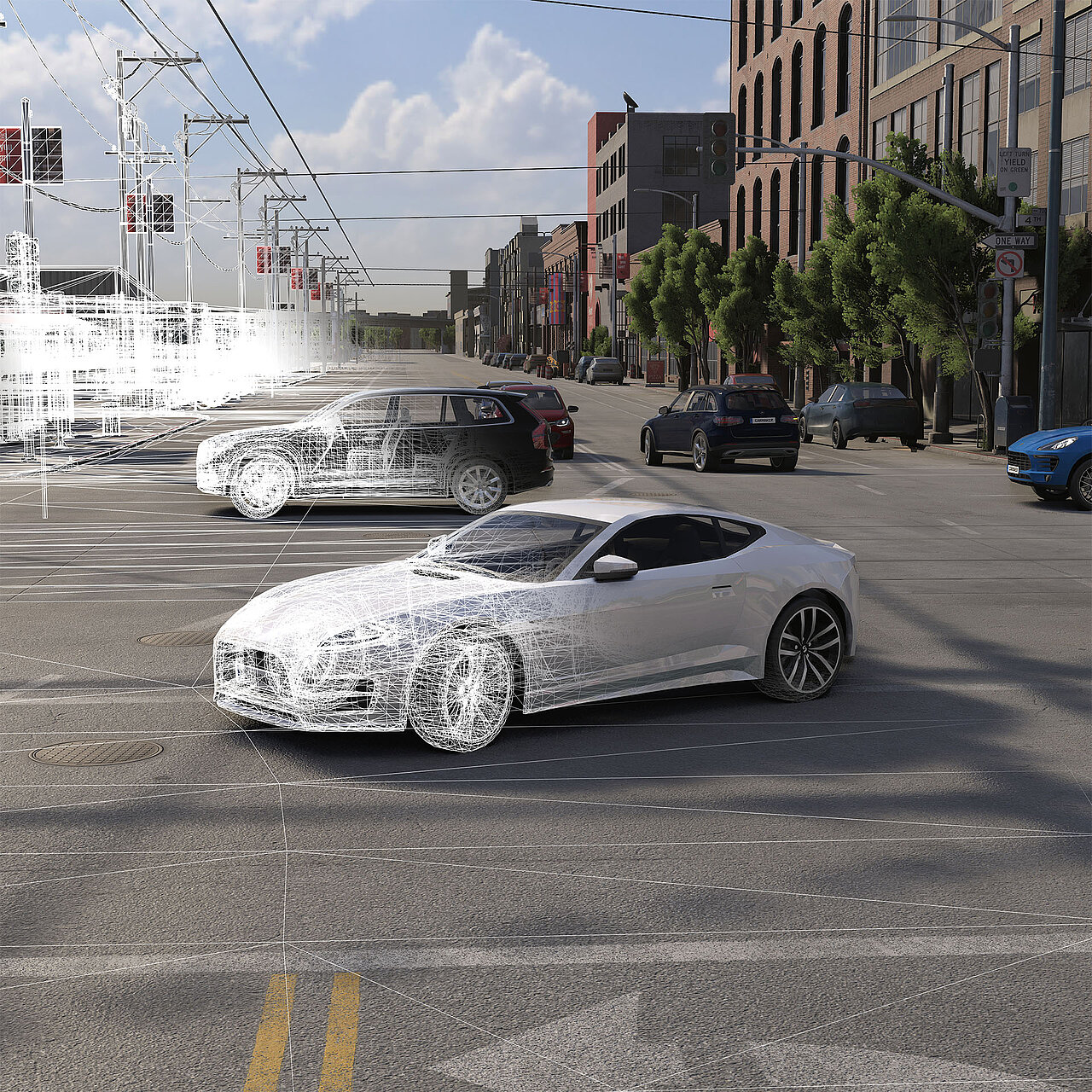
- Virtual full vehicle models consider the vehicle, driver, traffic environment as well as other road users
- Realistic simulation of complex driving scenarios under realistic conditions
- Use cases range from software-in-the-loop tests to test bench applications
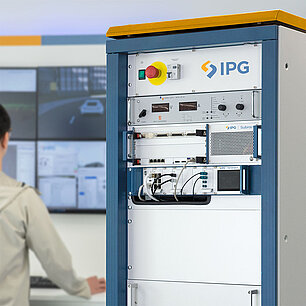
- By combining real hardware and initial prototypes with a virtual environment, components, such as different electric drive systems, can be calibrated, tested and validated at an early development stage and in the full vehicle context

- Combining real vehicle tests and virtual test driving unites the strengths of both approaches for optimal validation
- Consistent use of simulation throughout the entire development process – guaranteed comparability of models, tests and evaluation criteria from model-in-the-loop (MIL) to vehicle-in-the-loop (VIL)
- Complex decisions can be made thanks to an agile, simulation-driven test environment that enables the right tests at the right time
Use cases
Combined brake tests: Efficient validation of brake torque and particulate emissions
In collaboration with Volvo and Link, we leverage the strengths of virtual and real-world testing environments to advance brake testing. In addition to overcoming the limitations of traditional methods regarding accuracy and reproducibility, the goal of these testing environments is to reduce development time and costs, and to analyze the estimation of brake torque and particle concentration.

Optimizing comfort and energy efficiency through the real-time simulation of electrified powertrains
For optimal comfort and energy efficiency, electric powertrains require a precise analysis of interactions between the suspension, the powertrain and the vehicle control and communication system. Traditional development processes are often unable to efficiently meet these requirements. For this reason, we partnered with Typhoon HIL and RLE International to develop a real-time simulation environment capable of integrating vehicle properties, vehicle handling and energy efficiency. The simulation environment is setting new standards, especially with regard to the electrical circuit in the virtual overall vehicle.

Maximum development flexibility thanks to the system-driven design of an electric powertrain
In collaboration with Rimac Automobili we developed a holistic system-driven design for an electric powertrain. One particular challenge is ensuring that the powertrain meets the vehicle performance goals. To address this, we used a virtual vehicle prototype that incorporates the customer-specific electric powertrain model, which allows quick and flexible changes to the prototype.

Predicting emissions with coupled vehicle and engine simulation in CarMaker
To predict emissions, Honda couples vehicle and engine simulation. The automotive manufacturer uses CarMaker as a simulation environment to test the RDE performance under all perceivable traffic conditions. Using simulation has the advantage of enabling a robust and reliable emission performance validation under realistic and varied conditions.

Powertrain analysis under real-life conditions in a combined test bench and virtual environment
Analyzing powertrains under highly dynamic and realistic conditions can be a very challenging task in vehicle development. KS Engineering overcomes this challenge by using a powertrain test bench that communicates with a virtual environment. This approach allows for the full simulation of complex performance tests with custom vehicle models on the test bench.