
Verify requirements and understand behavior
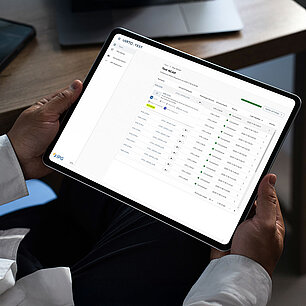
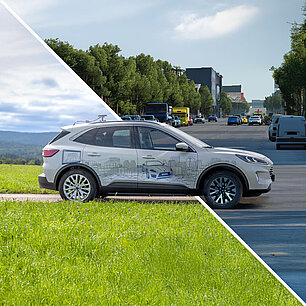
Complex vehicle functions set high requirements for development and validation. On the one hand, the challenge is to ensure that the system fully meets the technical requirements (verification) and, on the other hand, to test if it performs as expected in real-world vehicle operation (validation). Virtual test driving offers a distinct advantage: It combines both processes in one seamless, scalable workflow. Tests thus become more efficient, results are traceable, and all steps are accessible in end-to-end documentation.
Validation of
variants

One scenario, many variants. Differences in speed, weather conditions, visibility, or vehicle configuration tremendously impact system behavior. Virtual validation enables systematic tracking, automatic testing, and targeted validation of this variety, allowing for comprehensive and robust evaluation.

Validation ensures that systems work reliably under realistic conditions. In addition to technical functioning, validation also focuses on the interaction with the environment and traffic. Rare and safety-critical scenarios are considered deliberately to evaluate the vehicle behavior holistically, long before testing takes place in the real world.
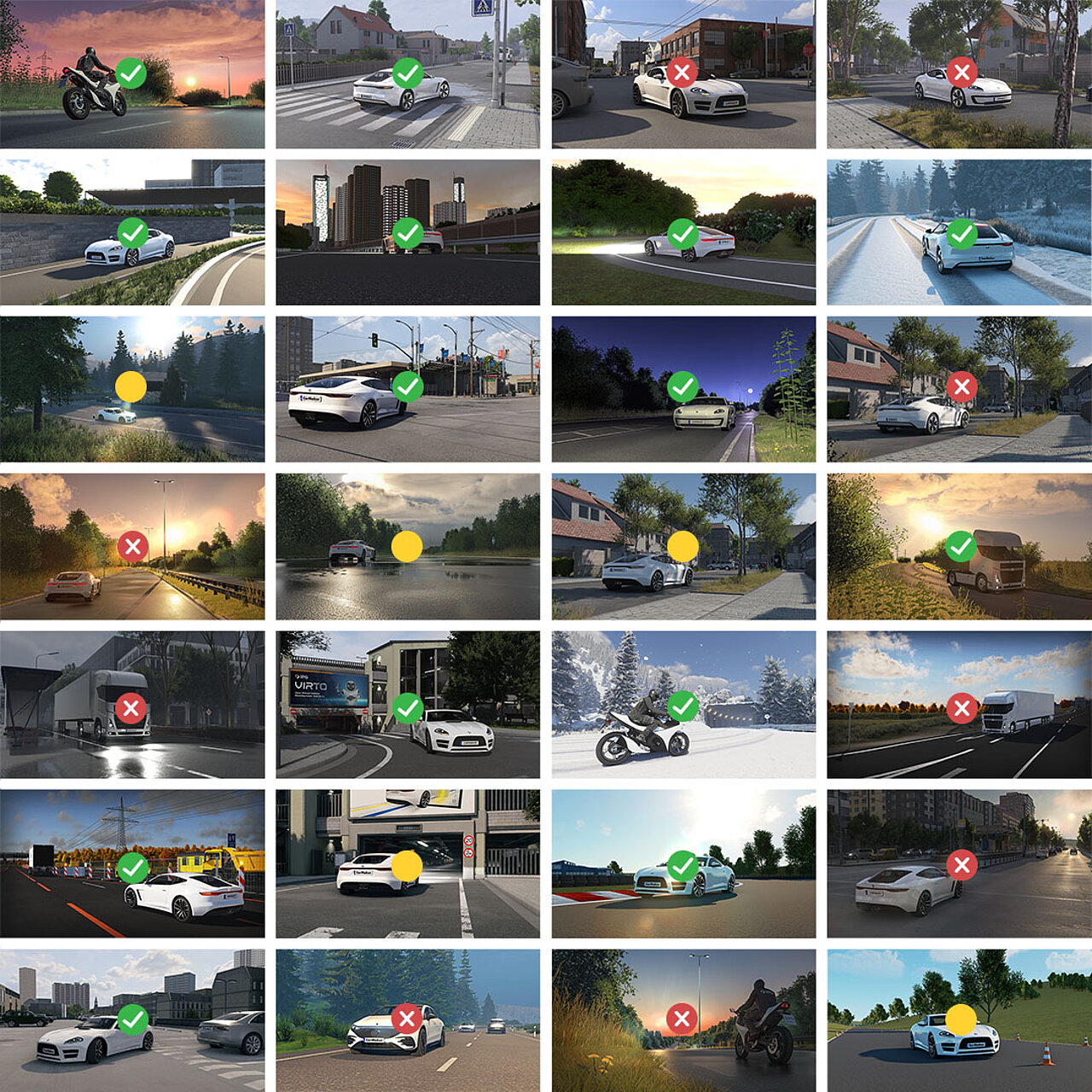
Virtual test driving systematically verifies requirements. Tests are performed automatically, leading to a transparent and traceable documentation of results. Early integration into the development process allows for timely recognition and targeted rectification of errors. This increases efficiency, improves traceability, and ensures reliable validation.

High demand for testing often collides with a tight schedule. Virtual test driving enables testing in parallel, automated iterations as well as consistent and reproducible test conditions. Validation can thus be scaled massively without having to make compromises in terms of validity and testing depth. This shortens development times and noticeably increases test coverage.

Verification and validation are core elements of registration. Virtual test driving delivers reliable data, ensures full traceability, and provides evidence compliant with standards. The process is geared towards relevant standards such as ISO 26262 and SOTIF to safely meet registration requirements.
Use cases
Validation of ADAS functions in virtual test driving
In virtual test driving, ADAS functions are validated under variable boundary conditions. The tests cover each of the requirements, are reproducible and their results are traceable. This ensures that these functions work reliably – even in complex driving situations and under varying environmental conditions.

Validation of the decision logic of automated driving functions using virtual test driving
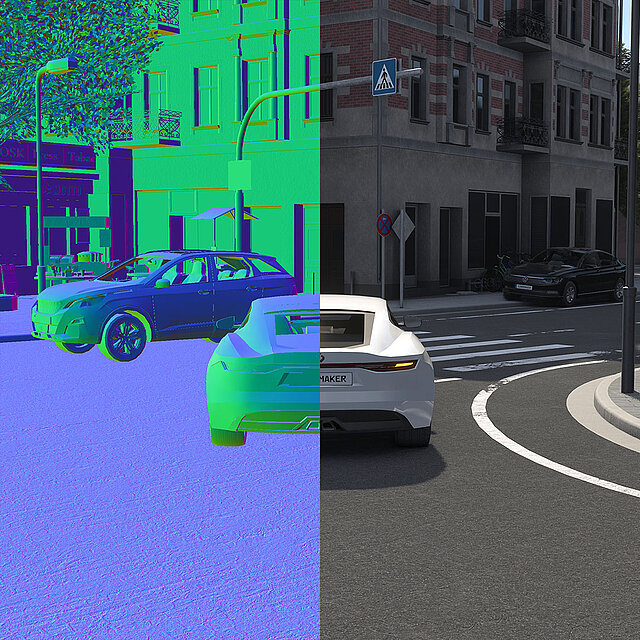
The decision logic of automated driving functions can be validated with the help of virtual test driving. To ensure consistency and safety, the system behavior is tested in complex and dynamic situations, which allows weak points to be identified and rectified at an early stage – before the vehicle enters real traffic.
Validation of electric drives using realistic load profiles
E-drives can be validated with the help of realistic load profiles. Thermal behavior, energy balance and control interventions are tested under virtual continuous operation – around the clock if required. This ensures the drive’s efficiency and reliability early on in the development process without the need for cost-intensive physical tests.