Physical Sensor Models
All sensor technologies in one consistent 3D environment
The add-on Physical Sensor Models offers detailed physical sensor models for all standard vehicle technologies related to environment perception: Camera RSI, Radar RSI, Lidar RSI and Ultrasonic RSI. The raw signal interface (RSI) provides information that can be used as input for signal processing and object tracking algorithms. The output considers several levels of physical effects depending on the selected module and lens type. Together with the ideal and phenomenological sensor models from the CarMaker product family, they create a powerful and complete package for simulation-assisted development and testing of modern ADAS and autonomous driving functions.
Who benefits from Physical Sensor Models?
- OEMs who want to enable efficient virtual development and reduce costly physical testing
- Tier 1 suppliers as well as ADAS and sensor system developers who design and optimize sensors and algorithms under realistic conditions
- Safety validation, testing and regulatory stakeholders to ensure consistent, scalable and standards-compliant validation
- Research institutes and universities working to advance simulation methods and drive innovation in perception systems
How can Physical Sensor Models be used?
- Integration of sensor models into the dynamic simulation environment CarMaker for closed-loop SIL/HIL validation to enable realistic real-time testing of system behavior
- Sensor model testing and verification ensure model accuracy and performance according to defined requirements
- Edge case tests to identify and evaluate system behavior in rare, critical or safety-relevant scenarios
- Reproducible simulation of standardized test cases for compliance and safety assessment in regulatory and NCAP scenarios
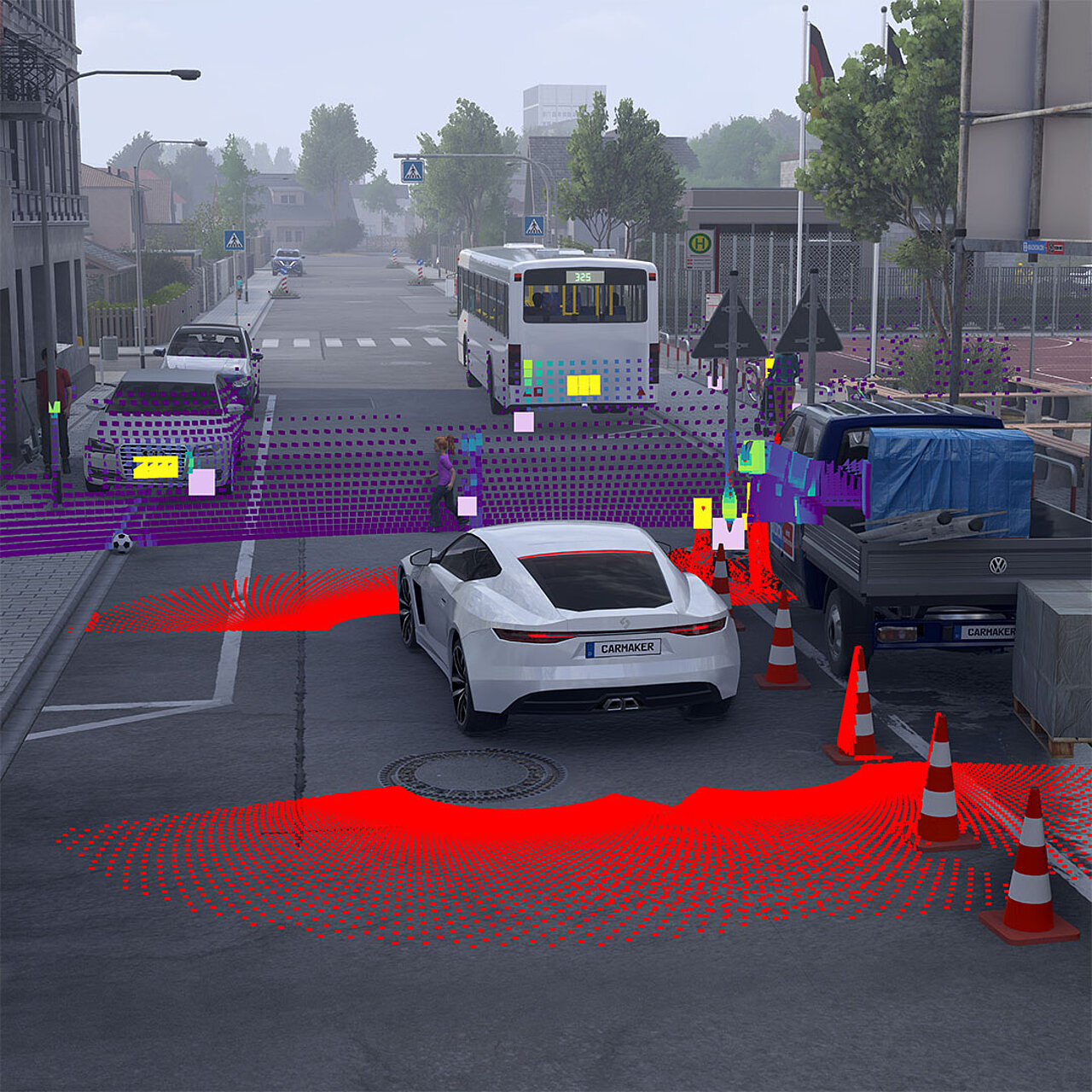
What does Physical Sensor Models offer?
- 3D geometry and mesh models represent the spatial structure of objects and environment for accurate interaction with sensor signals
- Illumination, lighting conditions and surroundings to model realistic sensing scenarios
- Raw signal models considering material characteristics simulate how different materials influence sensor signal generation and response
- Noise and imperfections capture real-world sensor limitations and variability in measurements
- The impact of weather effects like rain, fog or snow on sensor performance
How can the 3D environment be adapted?
- Static and dynamic scene variation using a Python API allows to flexibly modify environments and scenarios through scripting
- Process automation using Road API for efficient setup and adaption of road networks
- Easy object exchange due to support of standards like glTF and OpenMATERIAL for seamless integration of assets from different sources
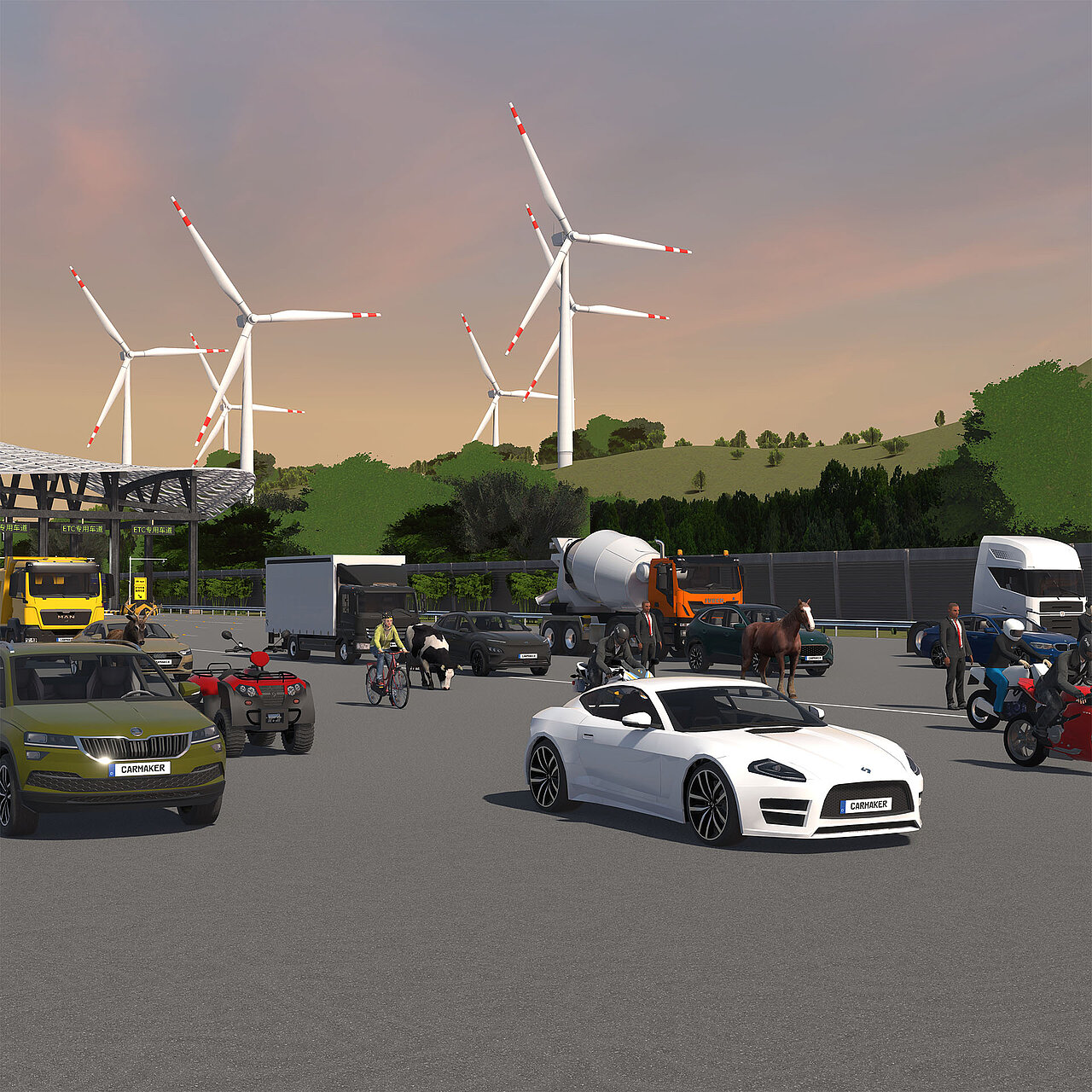
Which Physical Sensor Models are included?
Camera
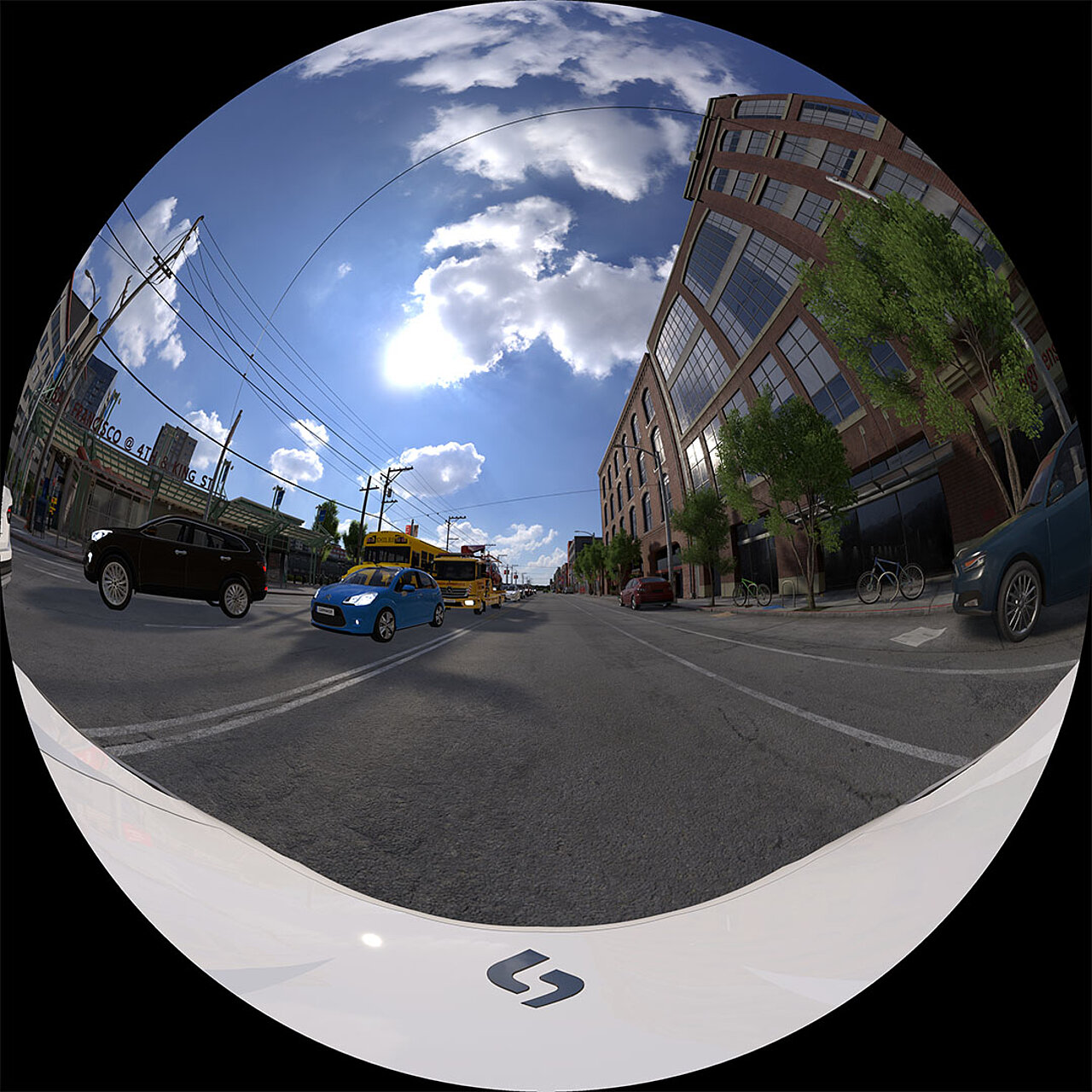
- Optics and lens simulation, e.g. lens distortion models, reproduce realistic image formation and optical effects
- Sensor readout and artifacts, such as motion blur and exposure control, simulate how camera sensors capture images, including typical imperfections
- Lighting and environment physics model light interaction with the scene for realistic visual perception
- Support of different lens models such as fisheye enables simulation of various camera types and wide-angle imaging characteristics
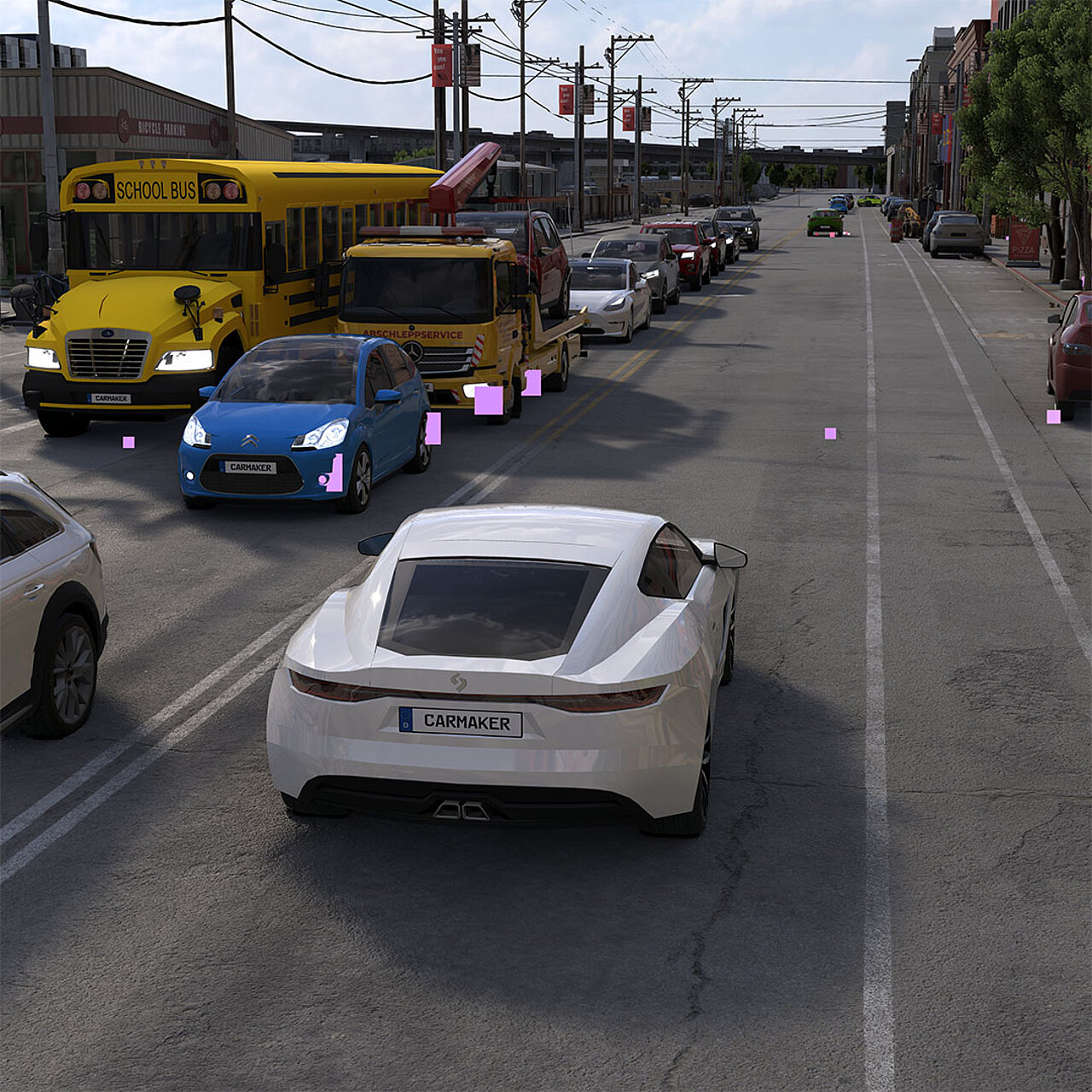
- Ray-traced electromagnetic propagation simulates realistic radar wave behavior, including reflection, diffraction and scattering
- Antenna characteristics modeling to accurately capture transmission and reception patterns
- Multipath and occlusion effects for signal reflections and blockages affecting detection performance
- Raw signal outputs and preliminary signal processing provide detailed radar data along with early-stage signal interpretation
- Interfaces for co-simulation, such as OSI, enable integration with other simulation components for synchronized system-level testing
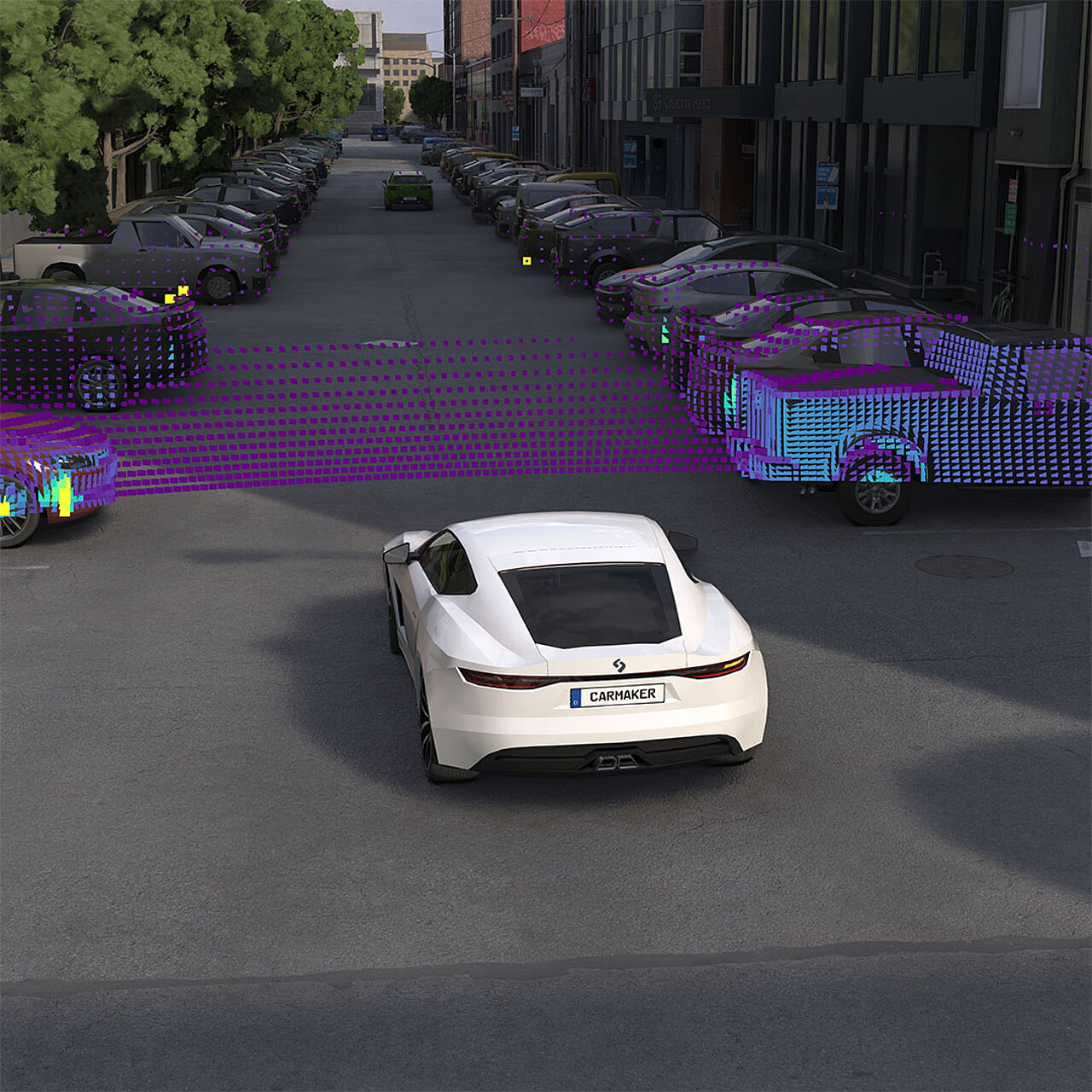
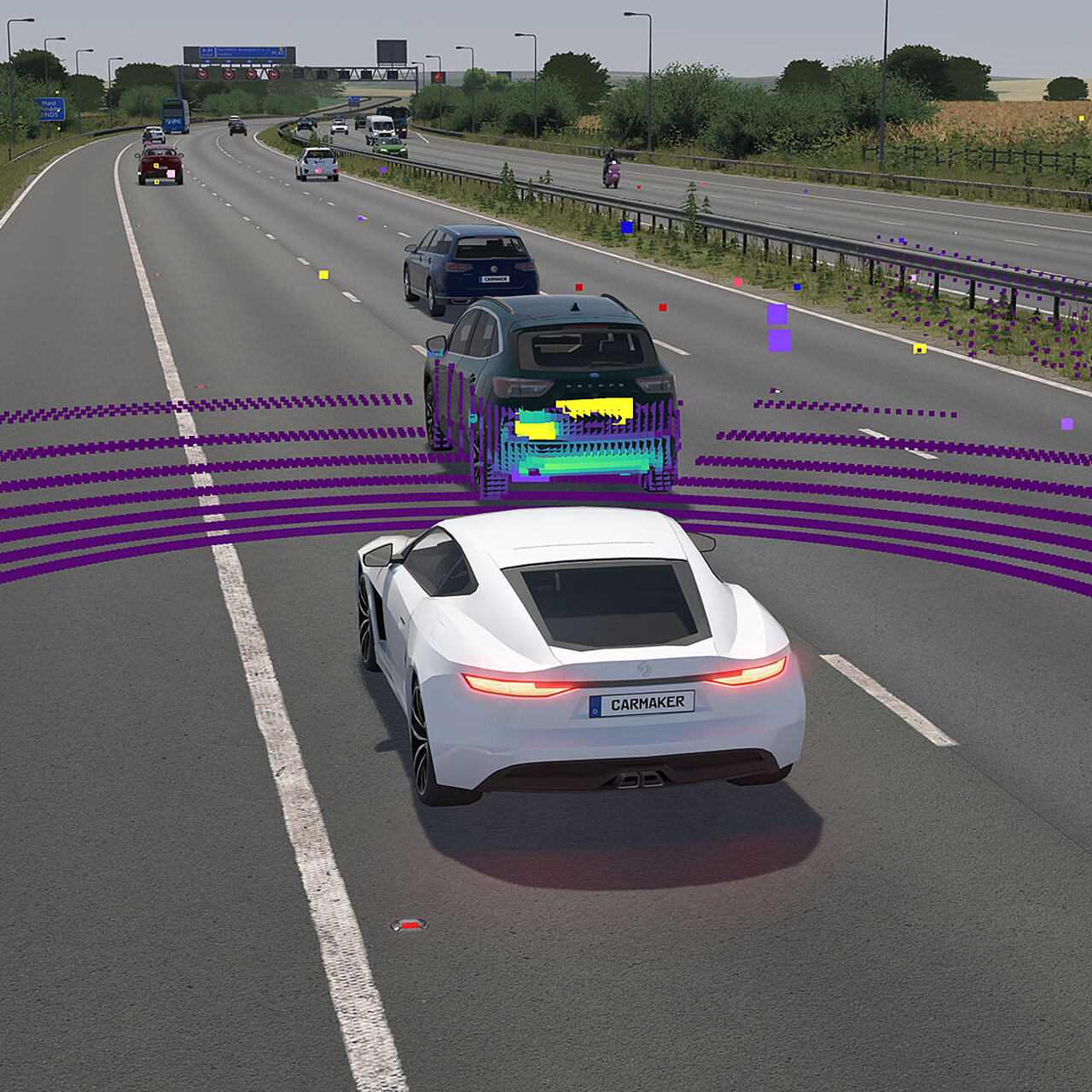
- Ray-traced propagation simulates the physical path of laser beams, including reflections and interactions with the environment
- Beam and scan model configuration defines the lidar’s emission pattern and scanning behavior for realistic data generation
- Time of flight estimation calculates distances based on the travel time of emitted and reflected light pulses
- Material and bidirectional scattering distribution function (BSDF) model how surfaces reflect and scatter laser light
- Point clouds represent the final spatial output as a dense set of 3D measurement points
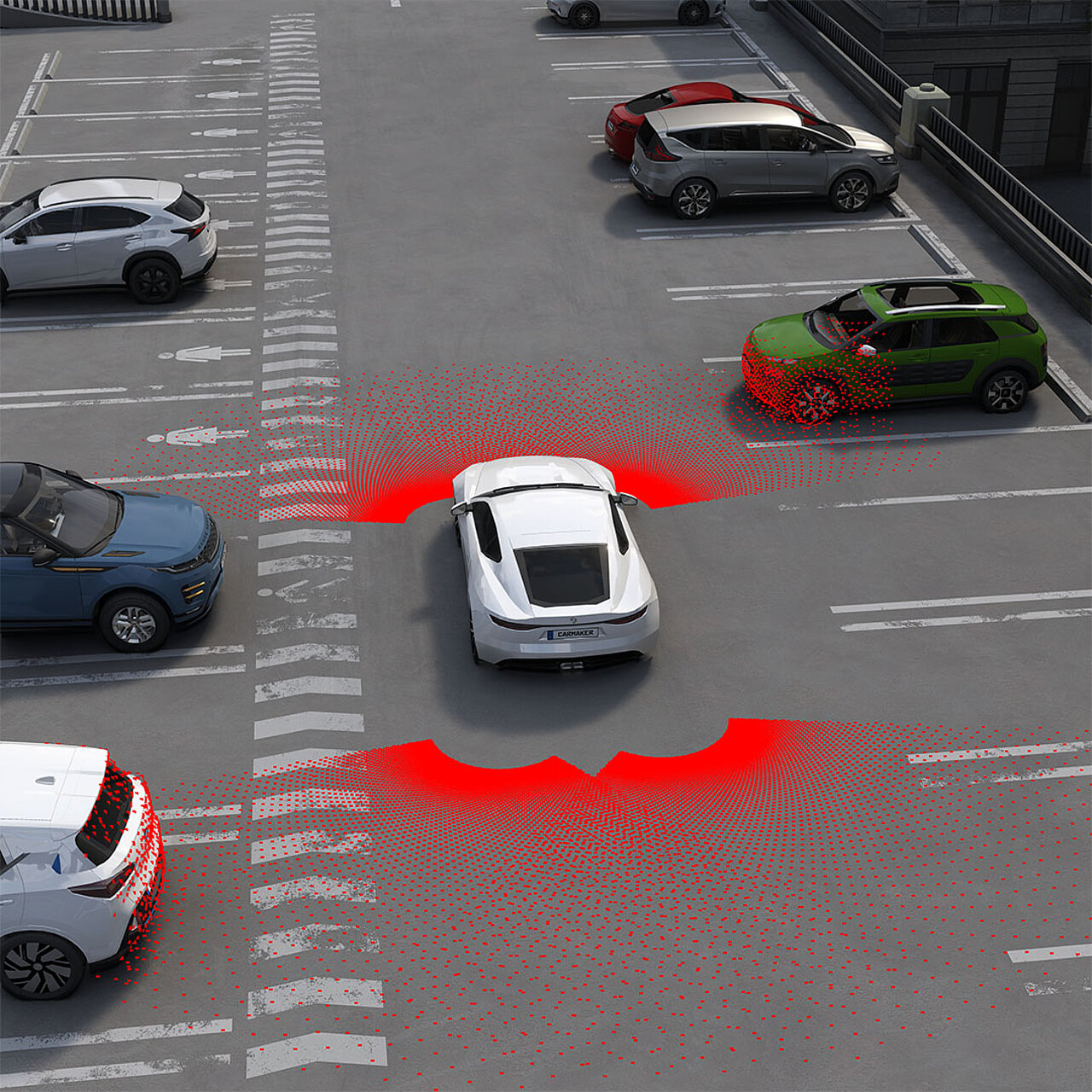
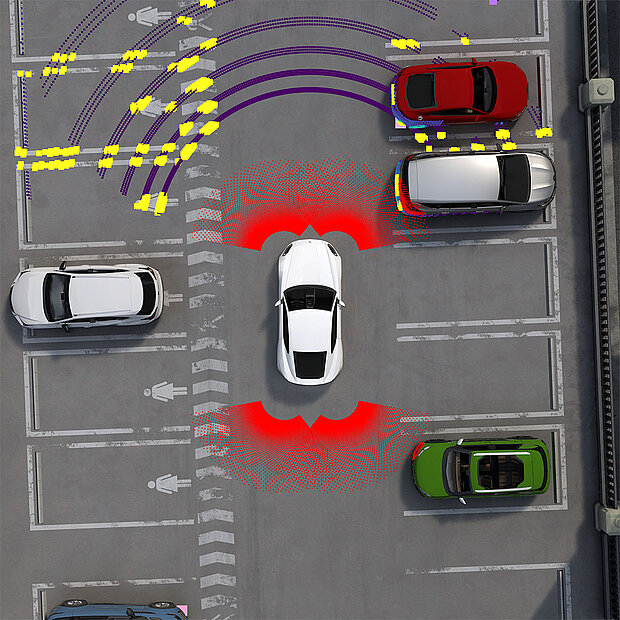
- Ray-traced acoustic propagation simulates how ultrasonic waves travel, reflect and attenuate in the environment
- Material and surface acoustic response model how different surfaces reflect and absorb sound waves
- Signal processing, such as peak detection and time-of-flight estimation, extracts distance information from reflected signals
- Various options for visualization based on the waveform help analyze signal characteristics and echo patterns
- Dynamic ray pattern adapts emission behavior to represent realistic sensor operation in different scenarios
Use Cases
Automatic emergency braking (AEB) validation
Physical camera and radar sensor models was used to test how an automatic emergency braking (AEB) system performs in a virtual driving scenario. In the simulation, a lead vehicle suddenly slows down while the ego vehicle approaches at highway speed. The radar model generates realistic signal reflections, including noise and typical detection uncertainties, while the camera model provides visual information affected by lens distortion, motion blur, sensor noise and reduced visibility from the environment. The perception algorithm fuses these data to estimate the lead vehicle’s position and relative speed. With that information, the AEB controller decides whether emergency braking needs to be triggered.
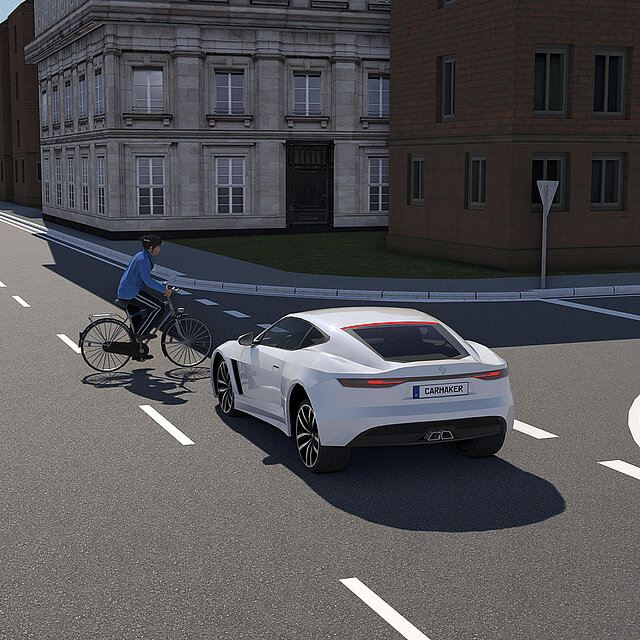
Blind spot detection using a short-range radar sensor model
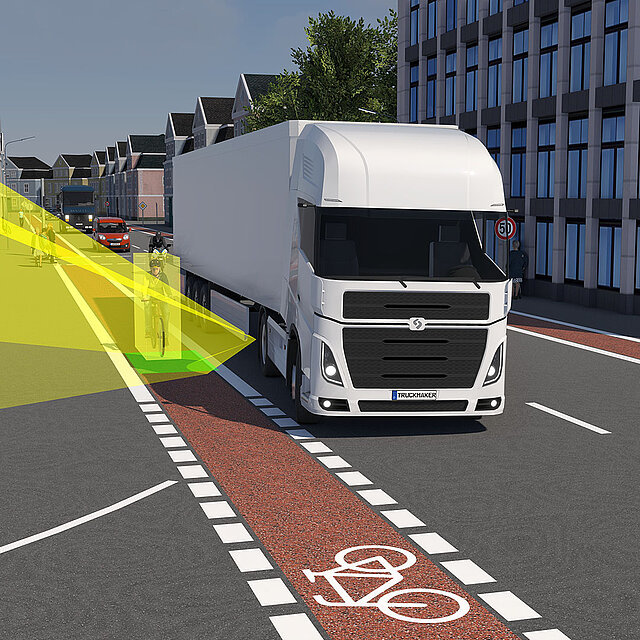
A physical short‑range radar sensor model was used to test how a blind spot detection (BSD) system performs during lane‑change maneuvers. In the simulation, the ego vehicle prepares to change lanes while another vehicle approaches from the adjacent lane within the radar’s detection range. The radar model produces realistic target reflections, including measurement noise, range resolution effects and environmental influences such as multipath reflections. The BSD algorithm analyzes these simulated radar returns to determine whether the blind spot is occupied and whether a warning should be issued.